About the Author: John Miller

Last updated: August 5, 2025
Reading Time: 11 minutes
What is a Factoring Agreement? Key Points and Practical Insights
A factoring agreement is when a business sells its outstanding invoices to a third party, called a factor, to get immediate cash. This financial arrangement is known as what is a factoring agreement and doesn’t involve debt. In this article we’ll go into the key points of factoring agreements, including definitions, key terms and types to help you understand how they work and the benefits.
Key Takeaways
- A factoring agreement is a financing entity buying a company’s receivables to improve cash flow without debt.
- Key terms like advance rates, factoring fees and reserve accounts are important to understand before entering a factoring agreement.
- There are two types of factoring agreements—recourse and non-recourse—each with different risk profiles and cost structures.
What is a Factoring Agreement
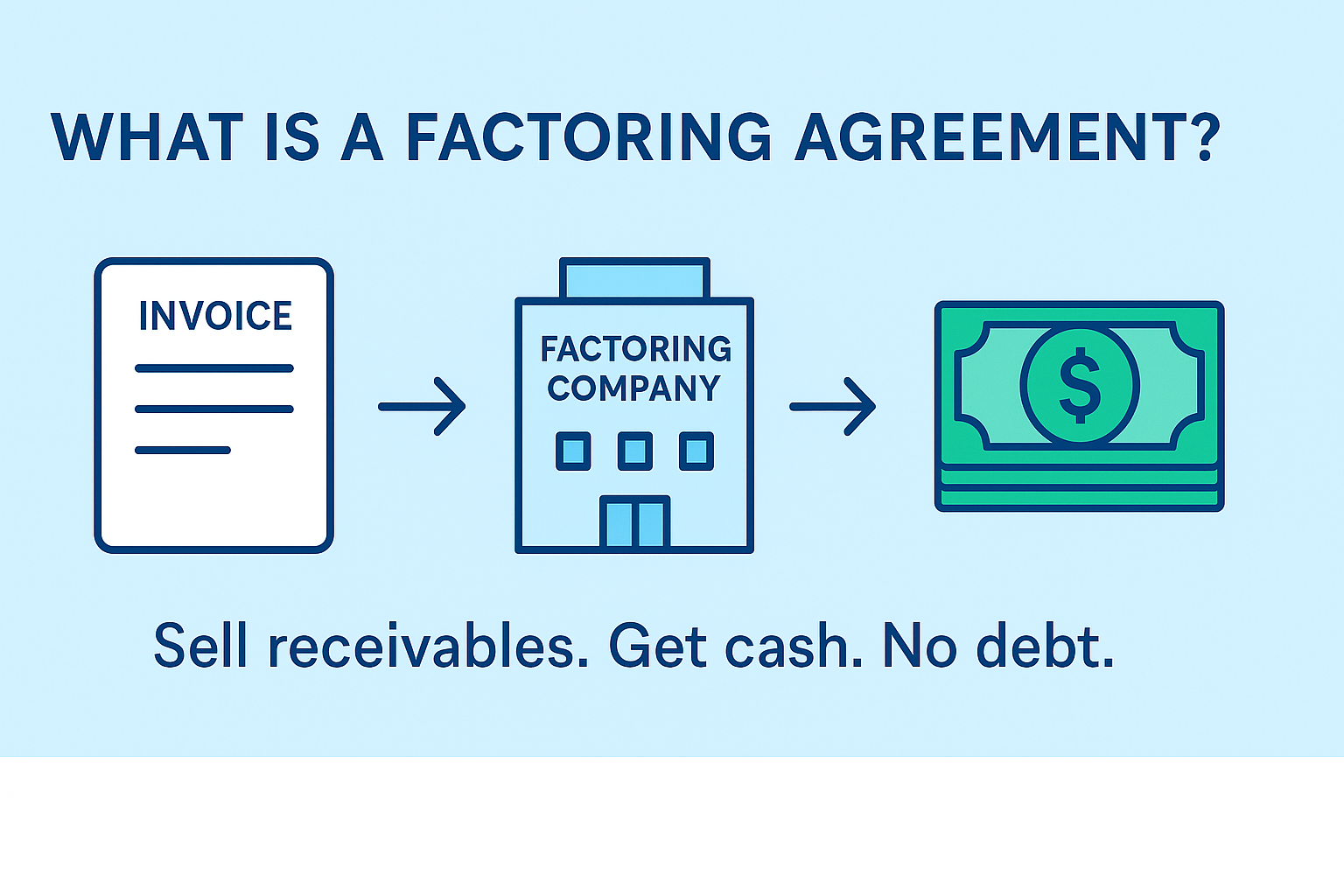
A factoring agreement is a financing entity buying a company’s receivables and taking over the collection of payments from customers. The main purpose of a factoring agreement is to generate cash flow by selling outstanding invoices to a third party. This allows businesses to get cash immediately without debt, making it a good option for liquidity.
Once the factoring agreement is in place the responsibility for collecting payments shifts from the business to the factoring company. This means the factoring company handles all the collections of the outstanding invoices, so the business can focus on its core activities. In some cases a factor can provide prepayment against the receivables even before they are collected, giving extra financial flexibility.
The factoring agreement is a detailed document that outlines all the factoring agreement terms related to the sale of receivables. It specifies the advance rates, factoring fees, reserve accounts and other important details. Understanding these terms is important for businesses to make informed decisions and get the most out of the factoring arrangement.
Factoring Agreement Key Terms
Understanding the key terms in factoring agreements is important to understand the agreement before signing. These terms include advance rates, factoring fees and reserve accounts, each play a big part in the factoring process.
Let’s break them down to understand better.
Advance Rates
Advance rates in factoring agreements are the percentage of the invoice amount a business gets paid upfront. This is usually between 70% and 90%. Businesses get 70% to 80% of their invoice value as an advance, sometimes up to 90%. 100% advance rate is rare.
These advance rates give immediate cash flow, helps businesses to maintain liquidity and cover essential expenses and ensure cash flow.
Factoring Fees
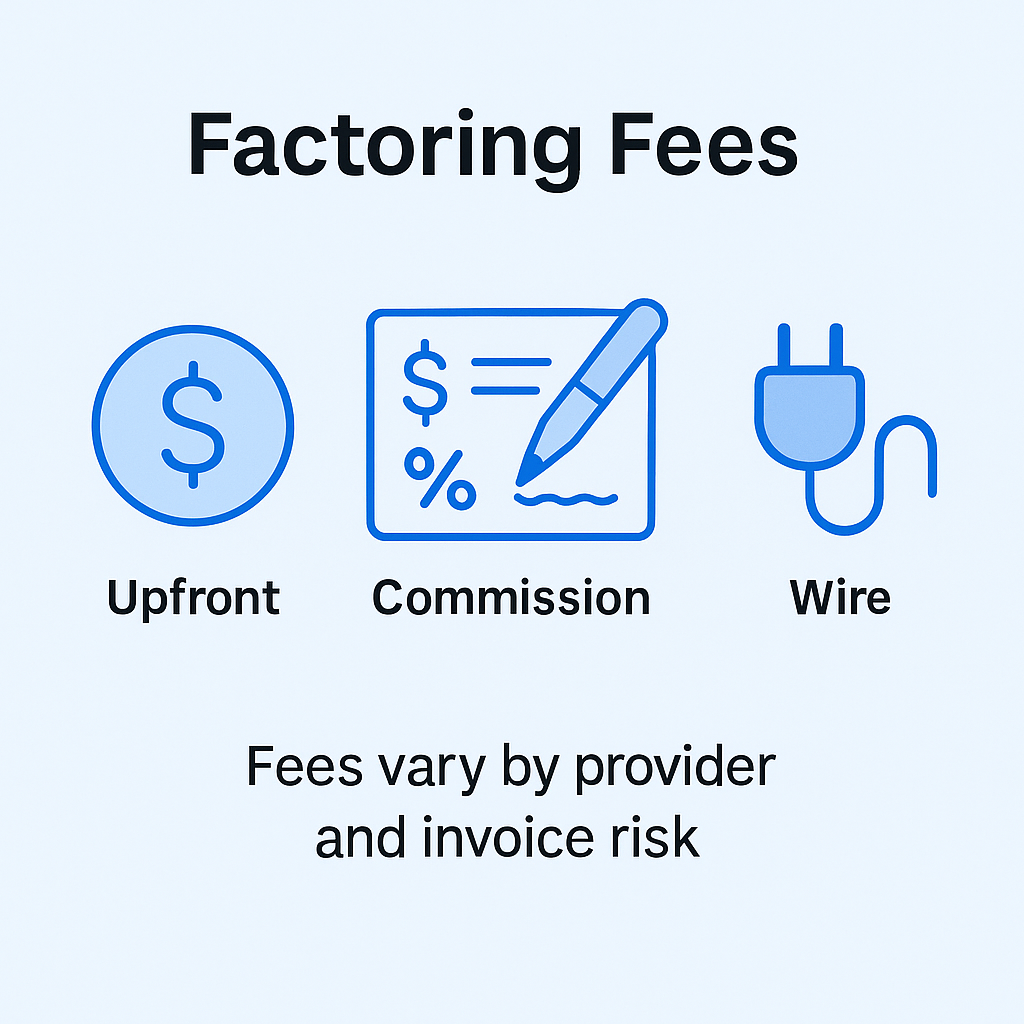
Factoring agreements involve various fees that affect cash flow and overall financial planning, including a factoring fee. Types of fees may include:
- Upfront fees
- Discount rates
- Commissions (usually 1.5% to 3% depending on the provider and the risk profile of the invoice)
- Additional fees like wire transfer fees and maintenance fees that can increase the overall cost of factoring.
Knowing the fee structure helps to avoid hidden costs and sound financial management.
Reserve Accounts
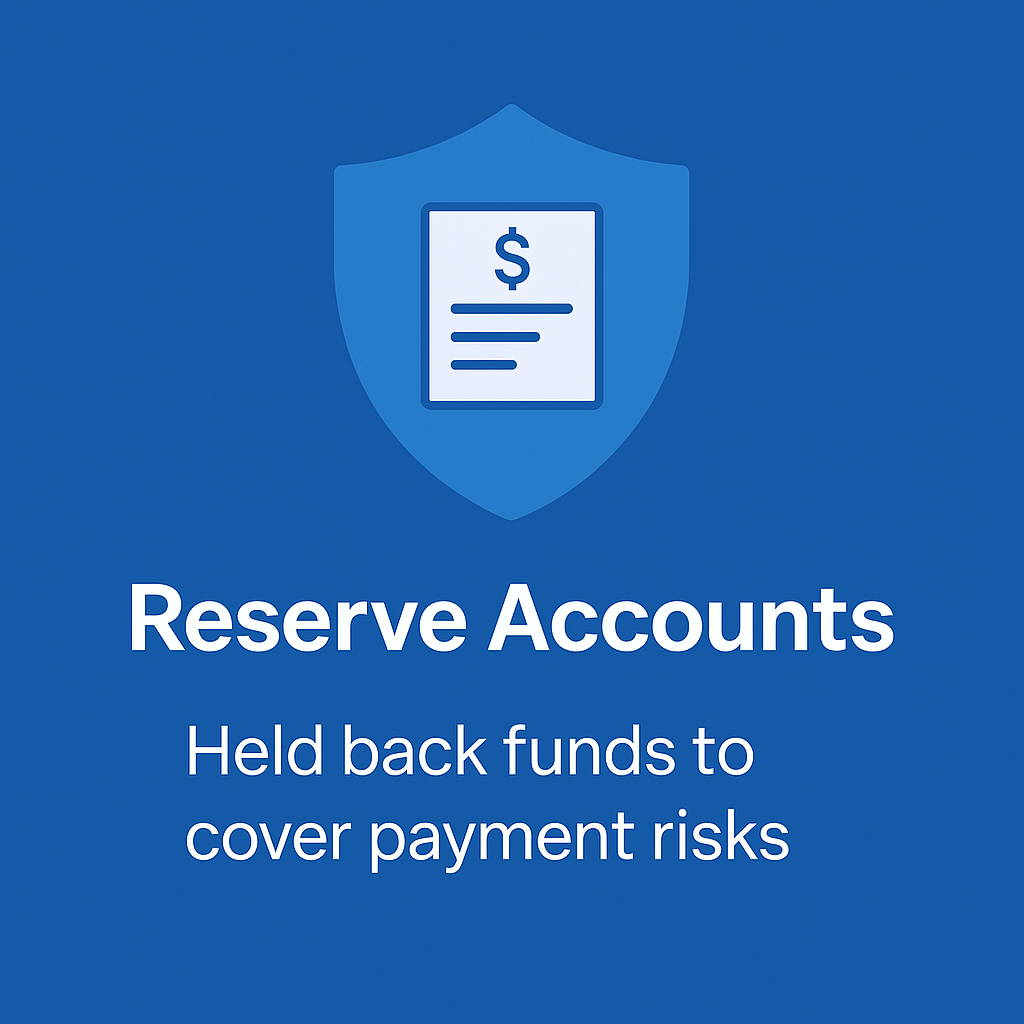
In factoring a reserve account is:
- An amount held back until payment is received from customers.
- Serving as collateral for the factoring company.
- Held to safeguard against non-collection or disputes.
These accounts act as a safety net against potential payment defaults so the factoring company can recover its costs if account debtors don’t pay.
Types of Factoring Agreements
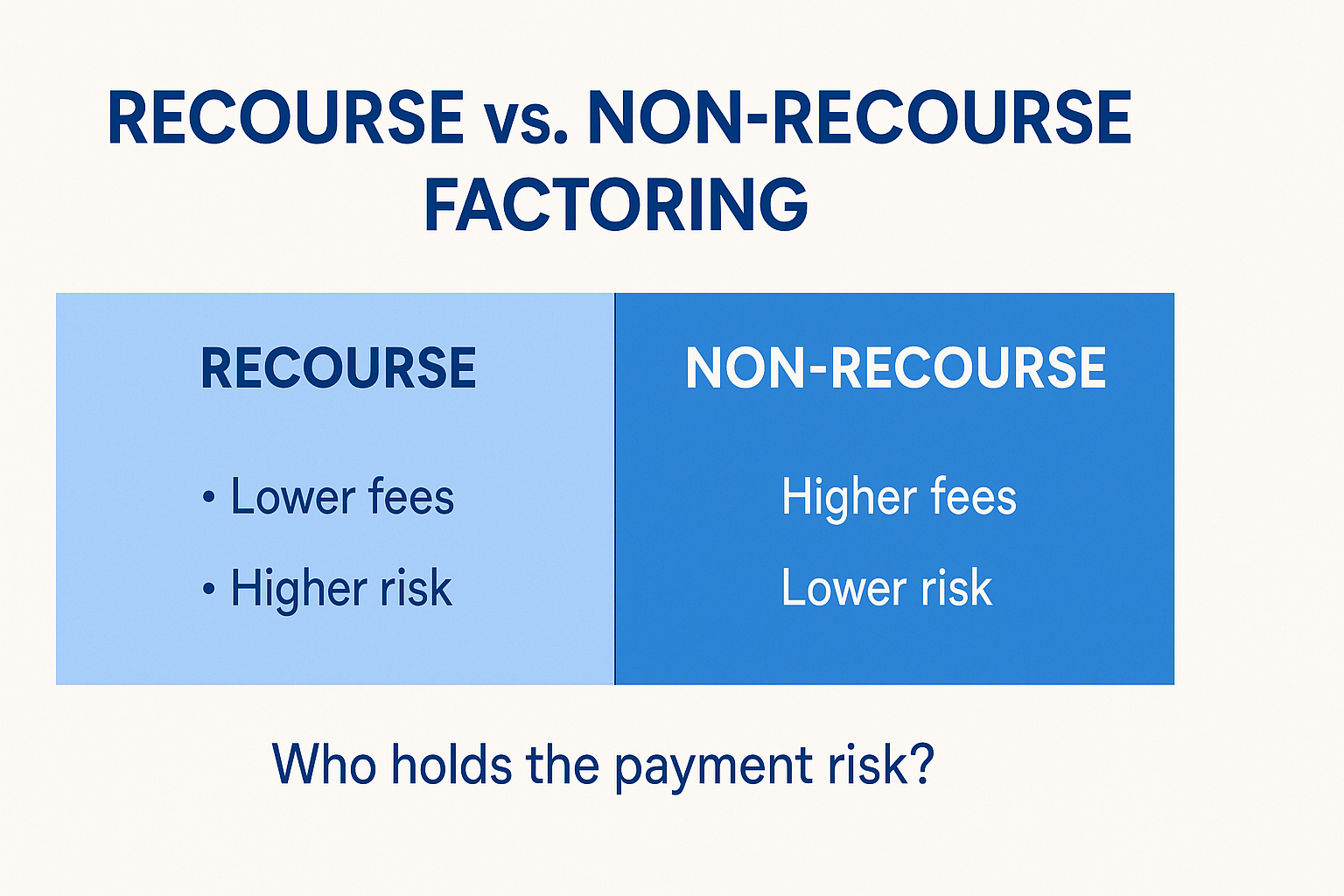
Factoring agreements can be categorized into two main types—recourse and non-recourse—each serving different business needs. There are two types of factoring agreements. These are recourse factoring and non-recourse factoring.
Understanding these types is important for businesses to choose the right factoring arrangement that fits their financial goals.
Recourse Factoring
In recourse factoring:
- The business is responsible for unpaid balances and must repurchase unpaid invoices.
- Businesses retain the risk of non-payment and must repurchase unpaid invoices, shifting the collection burden back to them.
- This type of factoring has lower fees compared to non-recourse options, reflecting the higher risk retained by the business.
Businesses must have confidence in their customers’ ability to pay. This is especially important when choosing recourse factoring, as customers play a big role in the financial failure of a business sells.
Non-Recourse Factoring
Non-recourse factoring is a type of factoring where:
- The risk of non-payment due to customer bankruptcy is transferred to the factoring company.* Purchasing unpaid invoices at a discount rate.
- The factoring company takes the credit risk under non recourse factoring agreements.
Non-recourse factoring offers protection against bad debts but is more expensive than recourse factoring. The factor takes the risk of non-payment due to customer’s financial issues, so the company gets paid regardless of the customer’s situation.
This shifts the risk entirely to the factor, gives businesses more security.
Factoring Contract Clauses
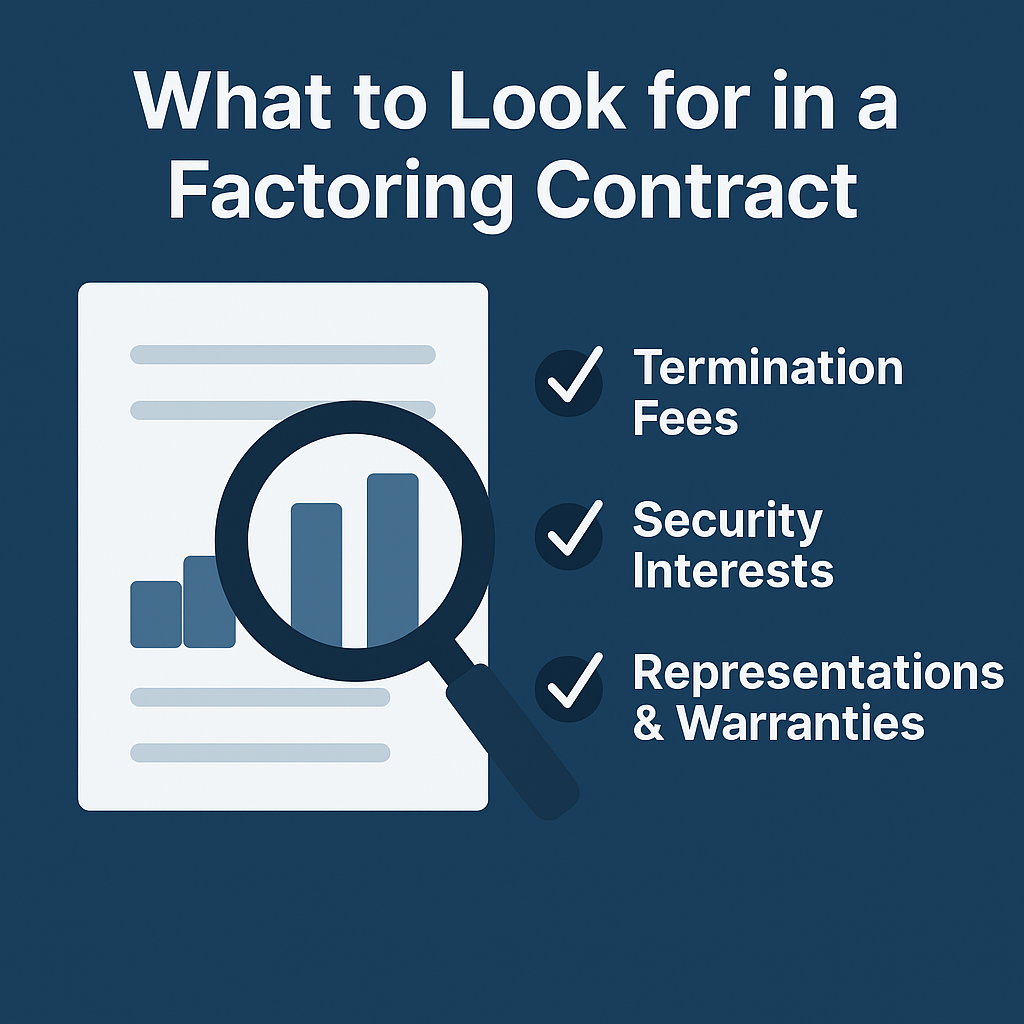
Knowing the various clauses in factoring contracts helps businesses avoid unexpected fees and terms that can negatively impact their finances. Businesses should review termination clauses, default remedies and representations and warranties in their factoring agreements including in the event of default.
These clauses can have big impact on the overall cost and risk of the factoring agreement.
Termination Provisions
Termination provisions in a factoring agreement specify how to end the agreement and the termination fees. These provisions help businesses plan their financial obligations.
Pay attention to the renewal and termination clauses, which allows for extending or ending the contractual terms early. Factors impose early termination fees if the contract is ended early outside the initial or renewal term.
Legal assistance can clarify the terms of a factoring agreement before signing. This involves clarifying the termination provisions.
Security Interests
Security interests in factoring agreements are the arrangements that allow a lender to secure repayment by taking a claim on assets, including a security interest in assets such as inventory and accounts receivable that can be used as collateral in factoring arrangements.
Collateral minimizes risk for factoring companies by providing tangible assets to claim in case of default.
Representations and Warranties
Representations and warranties in factoring agreements are important to ensure the validity and enforceability of accounts receivable. These representations and warranties ensure the quality of accounts receivable, confirms they meet specific standards. Factors need assurances that accounts receivable are free of legal disputes or claims.
The Factoring Process
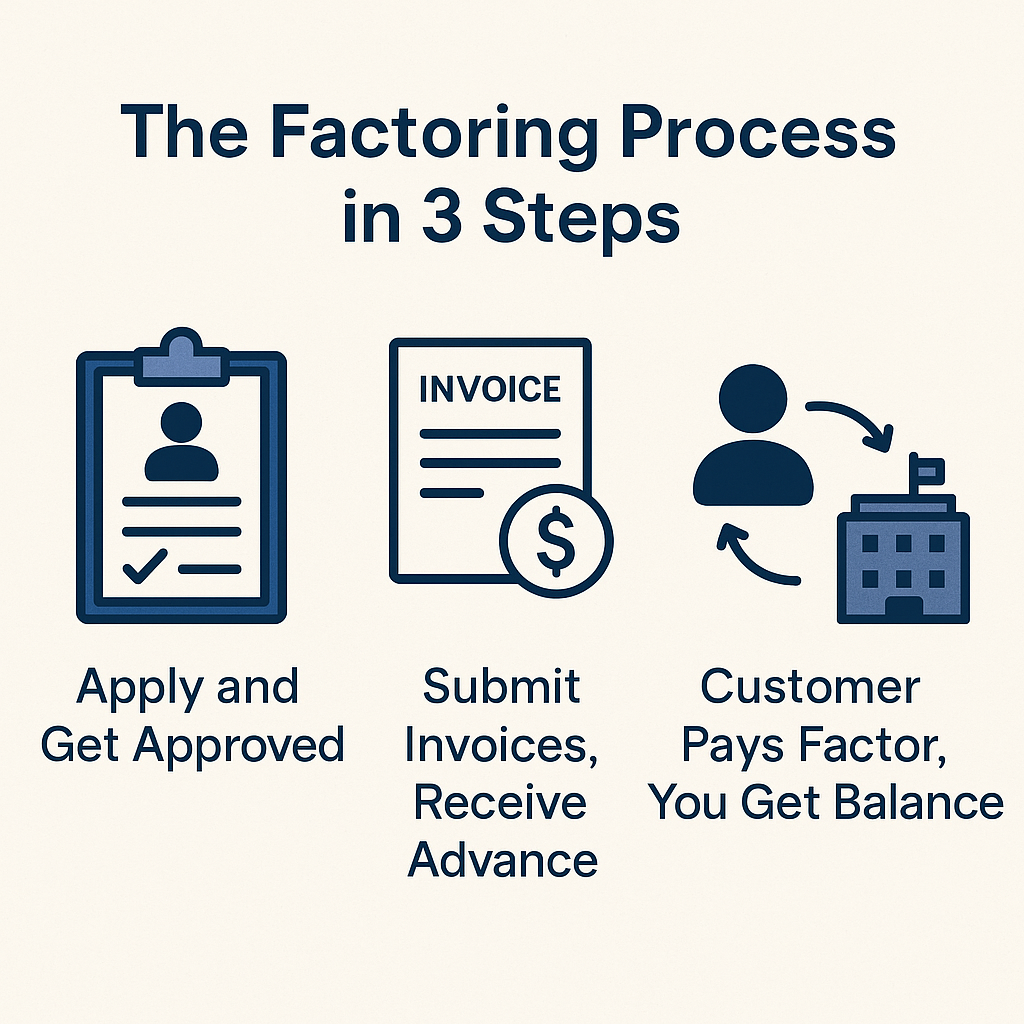
The factoring process has three steps. These are application and approval, invoice submission and funding, and collection and payment. Businesses should choose a factoring company based on various criteria including fees and customer service in the invoice factoring process.
Once approved for an invoice factoring agreement, businesses can start submitting invoices for funding. Opening an account is the first step in the factoring process with a company.
Application and Approval
After choosing a factoring company, businesses must submit an application along with their financial statements and accounts receivable details for review. This is the foundation of the entire factoring relationship.
The factoring company will review the business’s financial health and the creditworthiness of its customers to determine the terms of the agreement.
Invoice Submission and Funding
Businesses send invoices to the factoring company. This gets them cash advances. Upon invoice verification, the factoring company advances 70% to 90% of the invoice value. Accurate billing is key to prevent disputes which can delay payment processing and increase costs. Factored invoices can streamline this process.
Payment options may include ACH transfers or wire transfers, gives businesses fast access to funds. This process of invoice factoring can get businesses the funds they need quickly, supporting cash flow.
Collection and Payment
The factoring company collects payments from customers once the funding is provided through invoice financing. This allows businesses to focus on their core operations instead of worrying about invoice collection.
Once the factoring company collects payment from customers, the customer pays any applicable fees. The remaining amount owed is then remitted back to the business.
Factoring Agreement Benefits
Factoring agreements gives immediate cash flow which supports new projects and investments, ensures timely financial obligations are met. By selling accounts receivable to a factoring company, businesses relieve themselves from debt collection through accounts receivable financing and accounts receivable factoring, improves cash flow and receivable factoring. Debt factoring also enhances liquidity for businesses.
Factoring gives business flexibility, allows companies to respond quickly to market changes and grab growth opportunities. Overall factoring agreements offers benefits such as quicker access to cash, operational liquidity and ability to cover urgent expenses.
Immediate Cash Flow
Factoring provides immediate cash flow by making funds available almost immediately after invoice verification. Invoice factoring helps businesses by providing immediate cash for unpaid invoices, solves cash flow issues. Immediate cash flow allows businesses to maintain liquidity and operational stability, important for covering costs like payroll and financial obligations.
Businesses can use funds from invoice factoring for essential needs. This includes expenses like raw materials, payroll and other operational costs. Funding from invoice factoring is usually received within 3 to 5 days, allows businesses to act fast.
Credit Risk Management
Factoring companies assess credit risk for clients by doing credit checks. This helps manage credit risk by leveraging customers’ creditworthiness. By reviewing payment history, creditworthiness and order frequency, businesses can make informed decisions when considering factoring agreements.
Factoring agreements helps in managing credit risk. They do this by leveraging the creditworthiness of customers.
Before Signing a Factoring Agreement
Factor fees can impact overall cost of financing and businesses should compare flat-fee and variable-fee structures before entering into an agreement. Businesses must provide accurate representations of their financial standing as factors require assurances of legal operation and solvency to mitigate risk of loss.
Understanding the terms of the contract is key, including the reserve amounts which is determined by customer creditworthiness and industry risk. Businesses must do thorough due diligence on all these factors to avoid hidden costs and unfavorable terms in the factoring agreement.
Cost Comparison
Comparing factoring costs to traditional bank loans can help businesses evaluate the financial impact of choosing factoring as a funding option. Businesses should compare costs of factoring with other financing options to make informed financial decisions.
Knowing the full picture of factoring costs, including hidden fees is key to making a sound financial choice.
Reviewing Contract Terms
It’s important to review contract terms, including interest rates, fees and penalties before signing a factoring agreement. Reviewing contract terms carefully helps avoid unexpected fees and costs. Transparency in pricing is important, including review of fine print for any hidden fees. Terms like wire fees or origination fees must also be scrutinized.
Businesses must ensure the financial contract aligns with their financial goals and capabilities. In recourse factoring, knowing obligations is crucial to mitigate financial exposure.
Conclusion
In summary, factoring agreements is a solution for businesses that needs immediate cash flow and liquidity. By selling accounts receivable to a factoring company, businesses can focus on growth and operational efficiency without worrying about debt collection. The key terms, types of agreements, important clauses and the factoring process all plays a big role in making a factoring arrangement successful.As you enter into a factoring agreement, remember to understand the contract terms, compare costs and evaluate the benefits to your business. With the right approach, factoring can be a powerful tool for your business’s financial stability and growth. Go for factoring and let it be the key to your business’s success.
FAQs
What is a factoring agreement?
A factoring agreement is a financial arrangement where a company sells its receivables to a financing entity for immediate cash flow, the latter collects payments from customers. This arrangement gives liquidity to the business by converting outstanding invoices into cash.
What are the key terms I should know in a factoring agreement?
The key terms in a factoring agreement to understand are advance rates, factoring fees and reserve accounts. Advance rates is the percentage of an invoice value received upfront. Factoring fees includes various costs including discount rates and reserve accounts are funds retained to mitigate potential non-collection issues.
What is the difference between recourse and non-recourse factoring?
The difference between recourse and non-recourse factoring is the assumption of risk; recourse factoring allows the business to bear the risk of non-payment while non-recourse factoring transfers the risk to the factoring company, usually at a higher cost. This is important for businesses to consider when choosing a factoring option that fits their financial strategy and risk appetite.
What should I consider before signing a factoring agreement?
Before signing a factoring agreement, evaluate the costs including fees and potential hidden charges and review the contract terms, especially the clauses on termination and security interests. Do thorough due diligence to ensure the agreement is favorable and aligns with your financial goals.
How does the factoring process work?
The factoring process provides businesses with immediate cash flow by first setting up an account with a factoring company, then submitting invoices for funding, then the company takes over collections. This way businesses can focus on operations while ensuring timely payments.
About the Author: John Miller
Recent posts